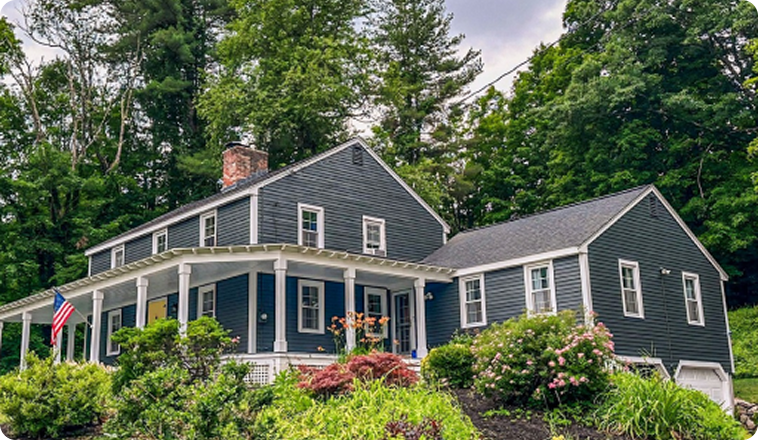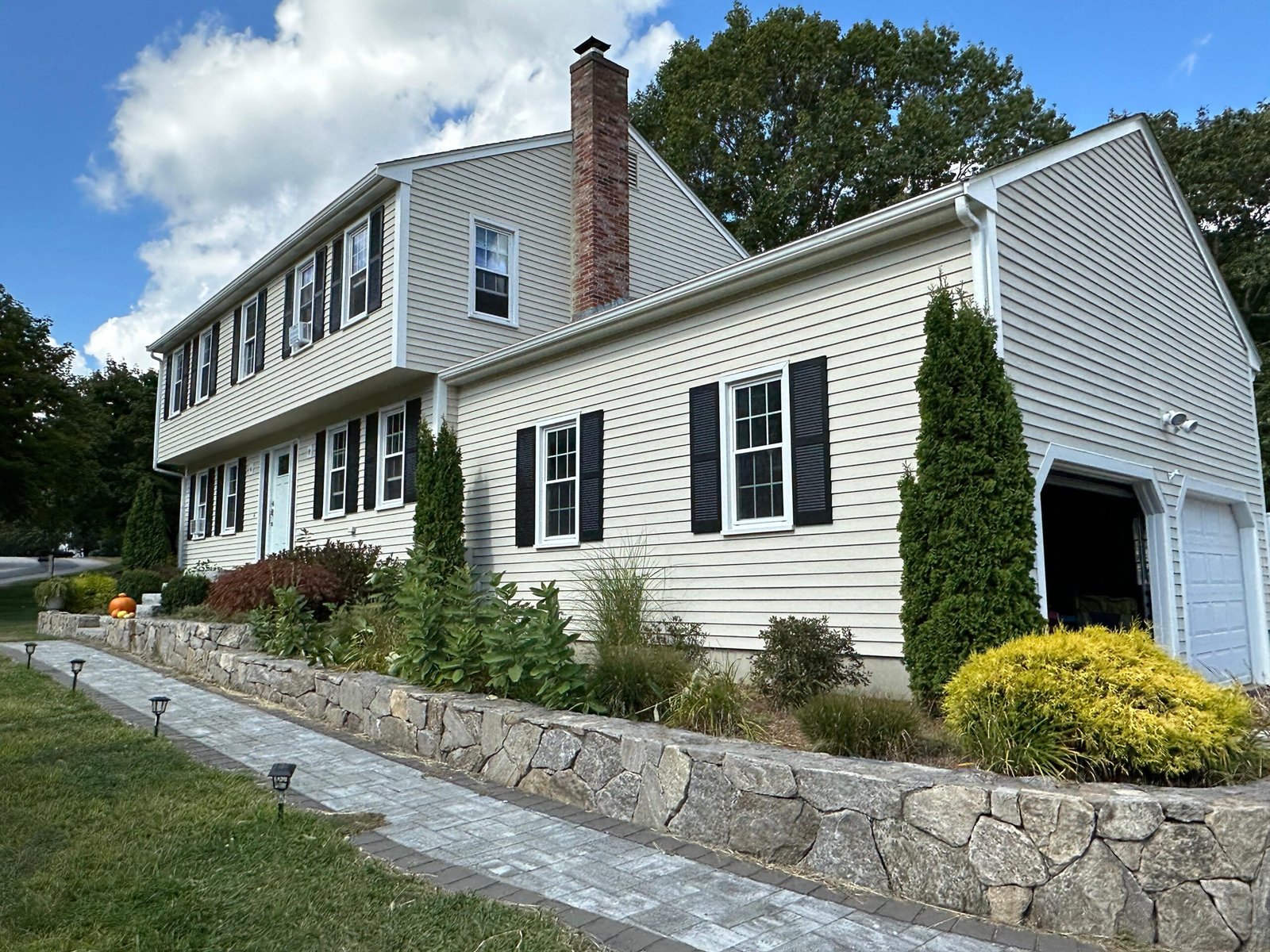
You block off a weekend to paint the trim, and by Thursday the forecast has changed three times. A stray shower, a muggy afternoon, a cold snap overnight, and suddenly the job you planned is fighting the weather.
The best time to paint your house exterior in Massachusetts is roughly late May through early October, when temperatures hold steadily above 50°F day and night, humidity stays moderate, and you can count on a stretch of dry weather. Early fall is often the sweet spot in New England.
Timing is not a minor detail. It decides whether the finish bonds and lasts or starts failing within a year, which is why a careful exterior painting crew watches the calendar as closely as the color.
Best Time to Paint Your House Exterior in Massachusetts
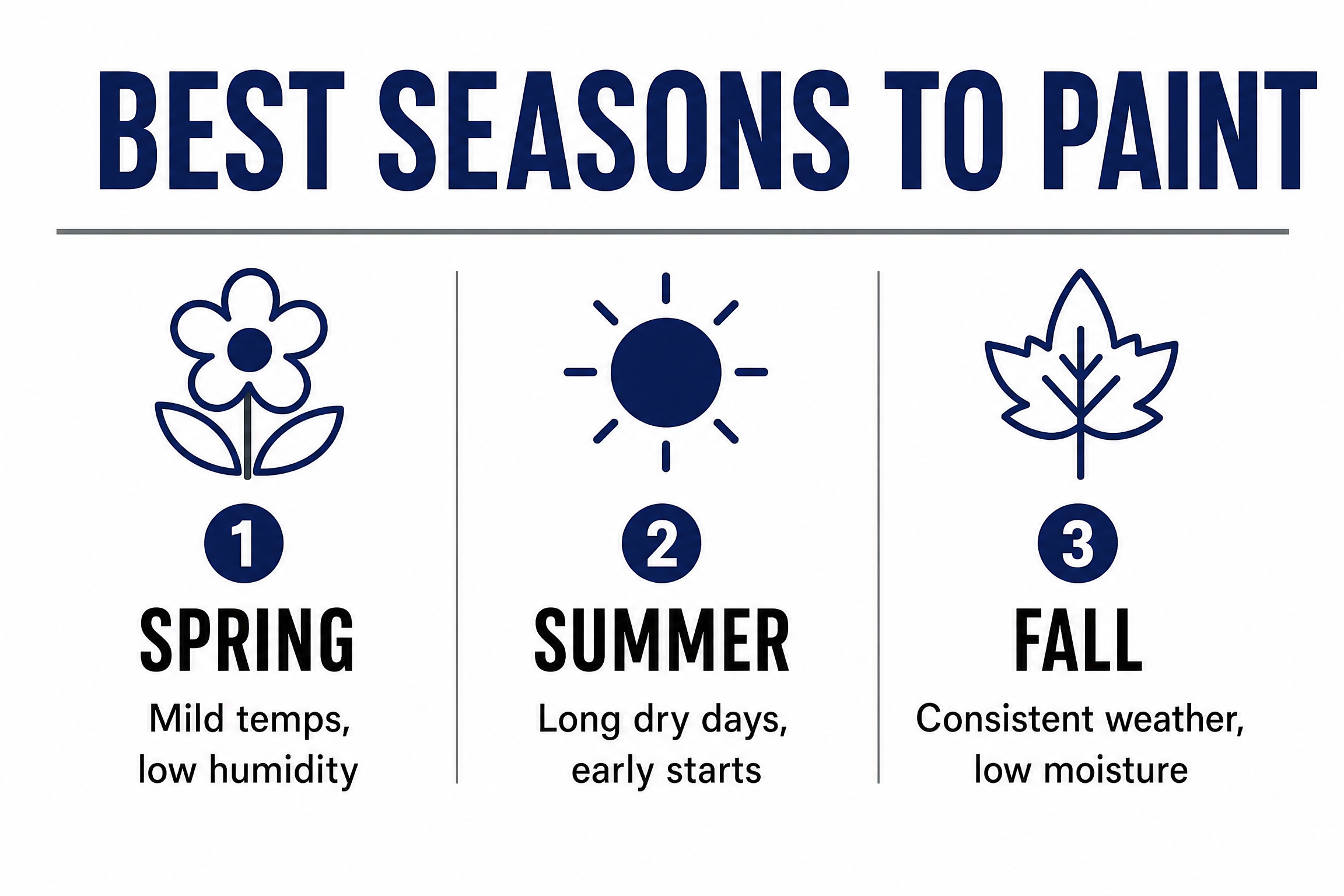
Massachusetts gives painters a real but limited window. Late spring through early fall is the stretch that suits the New England climate, when the region settles into mild, dry days that let paint go on and cure the way it should.
Within that window, timing still matters. Spring can be volatile, midsummer turns humid, and by mid-October overnight temperatures start dipping too low for a dependable cure. The trick is reading the season, not just the month.
Why Timing Matters for Exterior Painting
Paint is chemistry, and chemistry cares about conditions. When temperature, humidity, and dryness line up, the coating forms a solid film, grips the surface, and hardens into a durable shell. When they do not, you get poor paint adhesion and a longer paint curing time that invites problems.
Rushing the season is how a fresh coat ends in peeling, cracking, and blistering within a year or two. Good timing is part of protecting your home and delivering the long-lasting results that make exterior painting in Massachusetts worth the wait.
The Ideal Temperature and Humidity for Painting
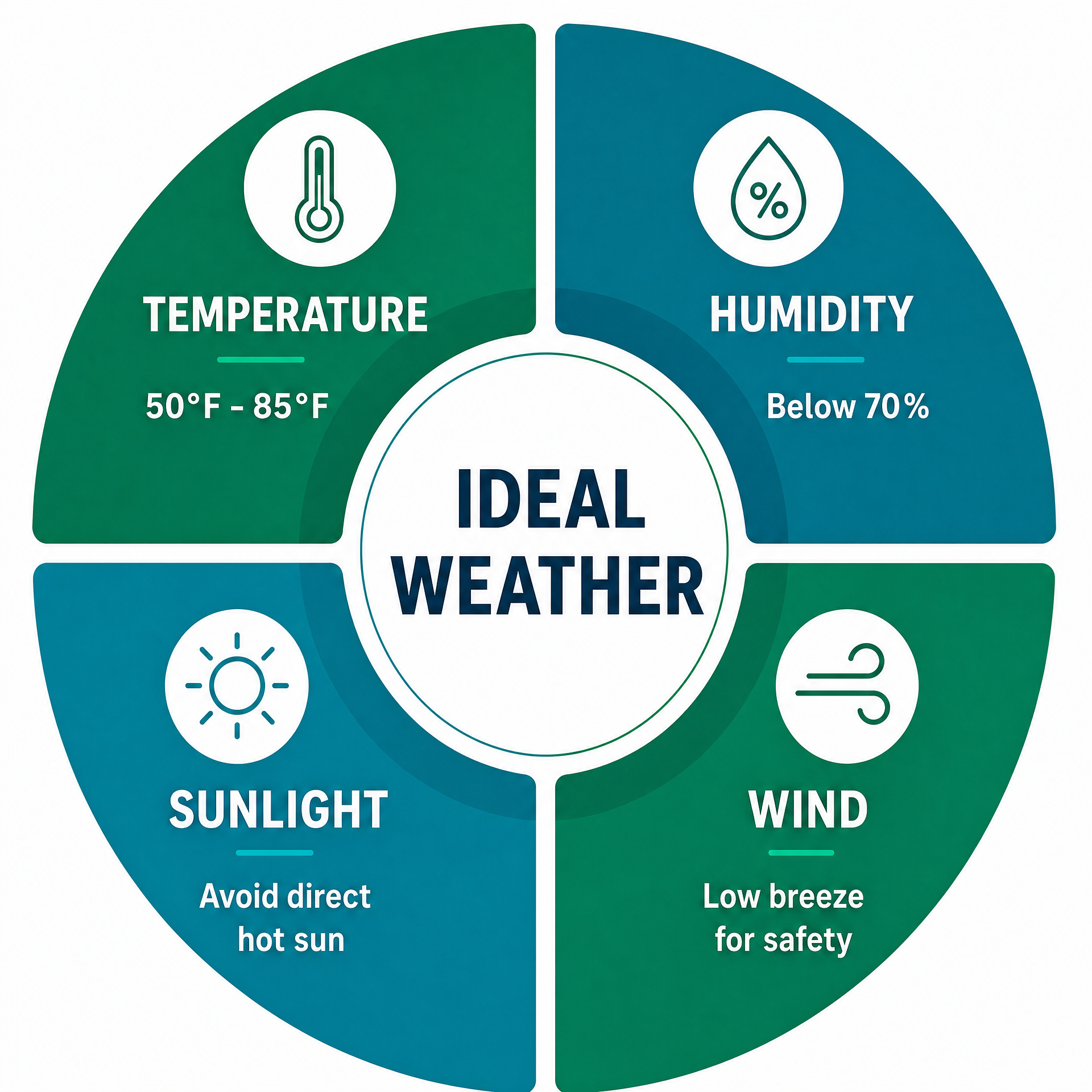
The numbers are not vague. The ideal temperature for painting sits between about 50°F and 85°F, measured on the surface rather than just the air, and held steady through the overnight hours so a fresh coat does not chill before it sets.
Humidity and dew point matter just as much. Manufacturer temperature guidelines point to moderate humidity, roughly 40 to 70 percent, and a surface that stays several degrees above the dew point so condensation never forms on wet paint. Skip harsh direct sunlight too, since a sun-baked wall dries faster than the paint can properly bond.
Painting Season Month by Month
Here is how the Massachusetts painting season tends to unfold.
- May. Late May opens the season as overnight temperatures finally stay above 50°F, though early-month cold snaps still happen.
- June. Warm and generally stable, a strong month for exterior surfaces before peak humidity arrives.
- July and August. Prime daytime warmth, but watch summer humidity and afternoon storms, and lean on the cooler morning hours.
- September. Often the best of the year, with warm days, lower humidity, and steady conditions for a quality finish.
- October. Early October still works, but as the fall foliage season peaks, overnight temperatures drop and the window closes.
Spring, Summer, and Fall Painting in New England
Each season paints differently here. After the region’s cold winters, spring tempts Massachusetts homeowners with the first warm days, but unpredictable spring weather, sharp temperature swings, and frequent rain and moisture make it the riskiest stretch for a lasting result.
Summer offers long, warm days, though humid summers along the coast, from Cape Cod to coastal Massachusetts, can slow drying and force early-morning starts. Fall, especially September into early October, tends to deliver the most reliable mix of warmth and low humidity, which is why so many New England crews save big projects for autumn.
Weather Conditions to Avoid
Even in peak season, some days are simply wrong for painting. Hold off when you see any of these.
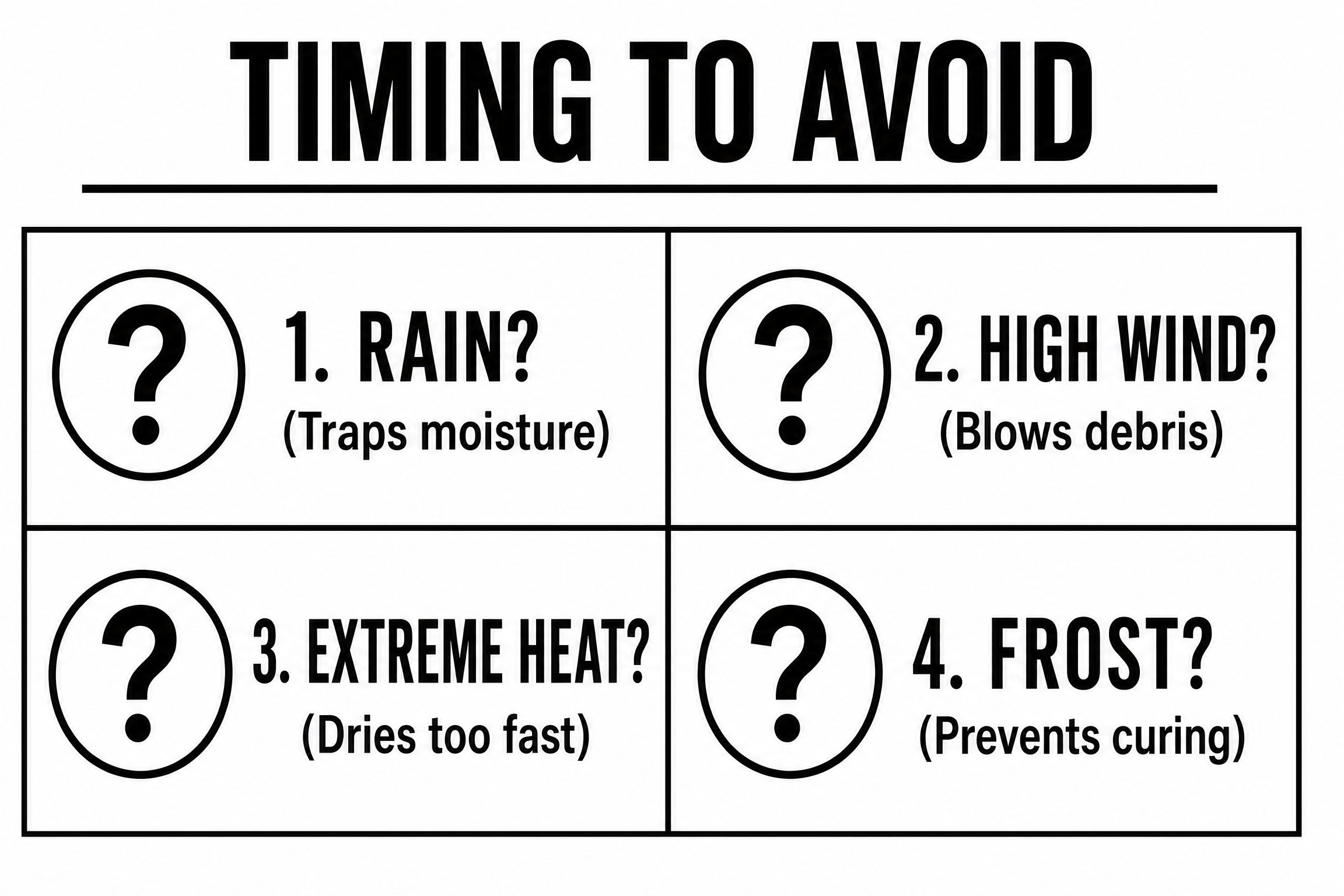
- Rain in the forecast. Skip painting if rain is likely within 24 to 48 hours, since moisture wrecks adhesion before the paint can set.
- Cold overnight temperatures. When overnight lows fall below about 50°F, standard paint struggles to cure, though low-temperature paint can stretch the season a little.
- High humidity or heavy dew. Damp mornings and high dew points leave condensation on exterior surfaces and cause streaking.
- Harsh direct sunlight. A wall baking in direct sun dries too fast, leaving lap marks and weak bonding.
- Strong wind. Wind carries dust and dries paint unevenly, and it makes clean work on trim and siding harder.
Planning and Scheduling Your Exterior Paint Job
The best window fills up fast, so planning ahead pays off. Booking professional painters in late winter or early spring often locks in a prime summer or fall slot before the calendar tightens.
Local crews also know how the season really behaves from Newton and Wellesley across Greater Boston and out through Middlesex County, where microclimates and shaded lots shift the timing on a given street. Scheduling your project with a team that paints these towns weekly beats guessing from a national calendar.
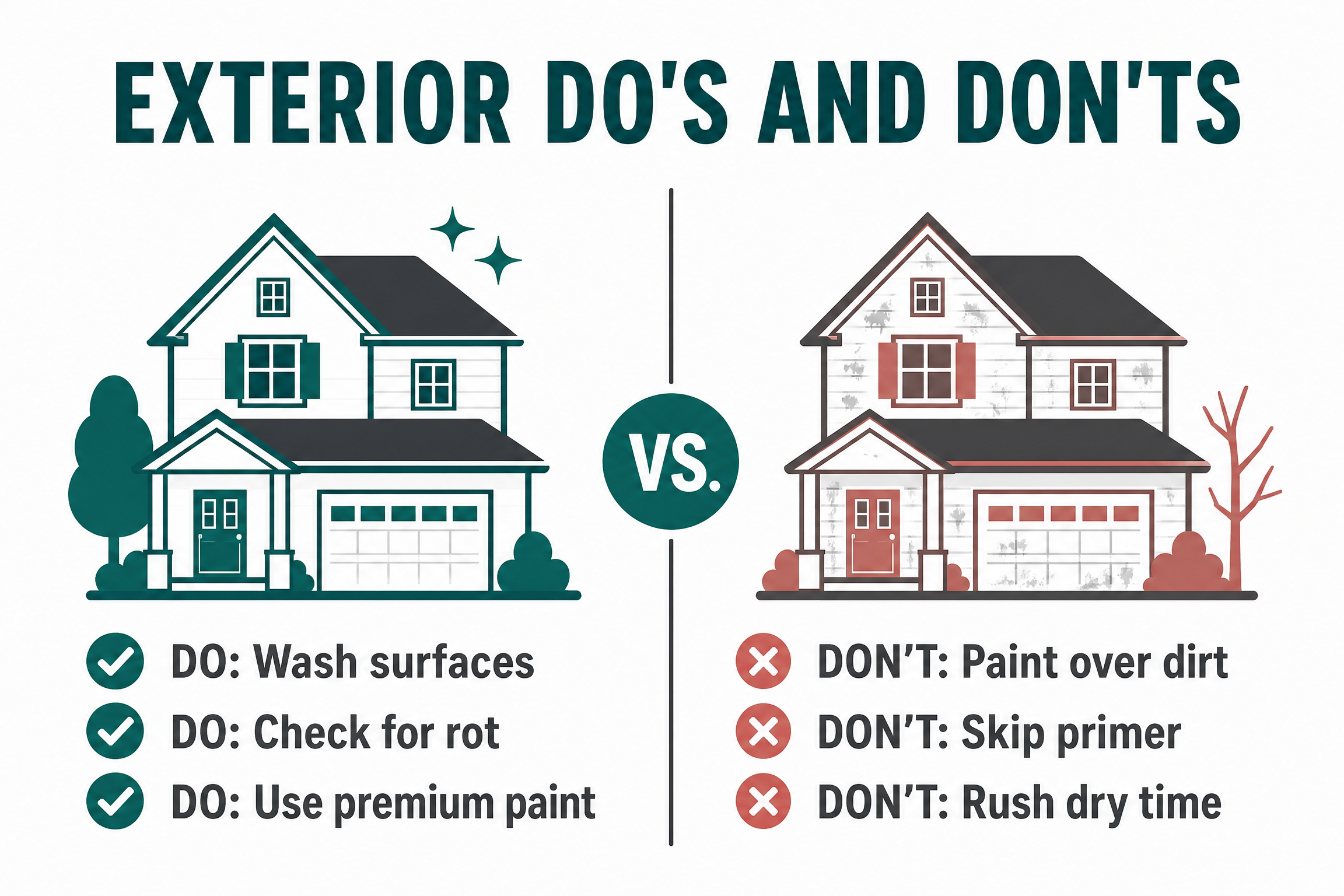
A good crew plans the surface preparation, primer, and two coats of paint around a dry stretch, then walks the finished exterior paint job with you. When you are ready, request a free estimate and reserve a start date built around real Massachusetts weather.
Frequently Asked Questions
What is the best month to paint a house exterior in Massachusetts?
September is often the single best month, with warm days and lower humidity. The broader window runs from late May through early October.
Can you paint an exterior in winter in New England?
Generally no. Cold air keeps standard paint from curing, and while low-temperature products exist, they have limits. It is better to wait for stable days above 50°F.
What temperature is too cold for exterior paint?
Once overnight lows drop below roughly 50°F, most standard exterior paints struggle to form a proper film. Always check the specific product label, since minimums vary.
Does humidity really affect exterior painting?
Yes. Moderate humidity, around 40 to 70 percent, is ideal, while high humidity slows drying and causes streaking. Watching the dew point matters as much as the temperature.
How long should it stay dry after painting?
Aim for a stretch of dry weather, ideally 24 to 48 hours, so the coat can set and cure. Moisture that hits fresh paint too soon undermines adhesion.
Should I hire a professional for exterior painting timing?
Professional painters track the forecast, dew point, and overnight lows and schedule the work around them. That planning is the easiest way to protect the finish, and a quick free estimate gets you a start date built around the season.