The difference between residential and commercial painting services comes down to five things: scale, scheduling, safety requirements, the coatings themselves, and how the job gets priced.
Because we run in-house crews on both sides rather than subbing work out, this is a comparison I can make from the ladder rather than from a brochure.
What is residential painting?
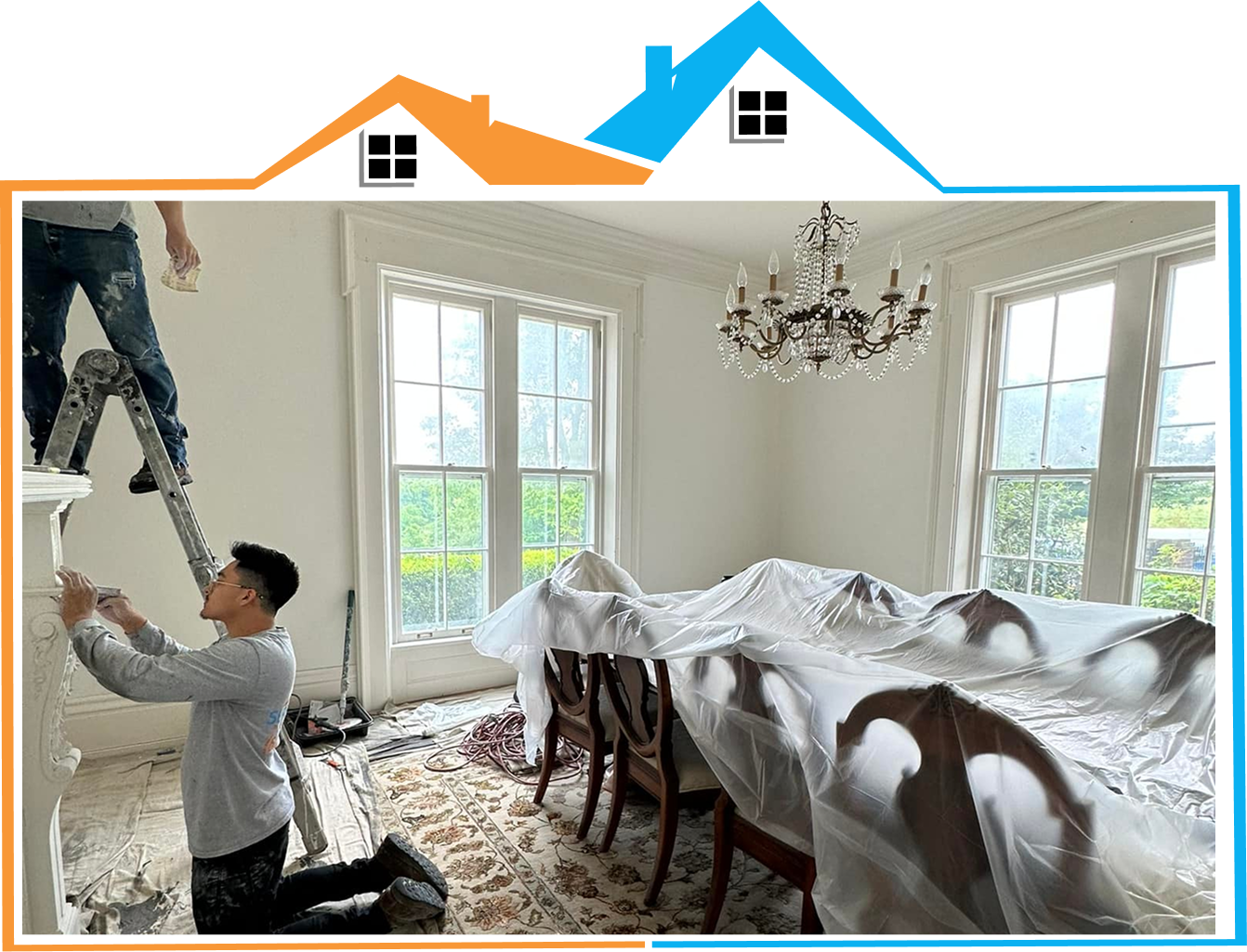
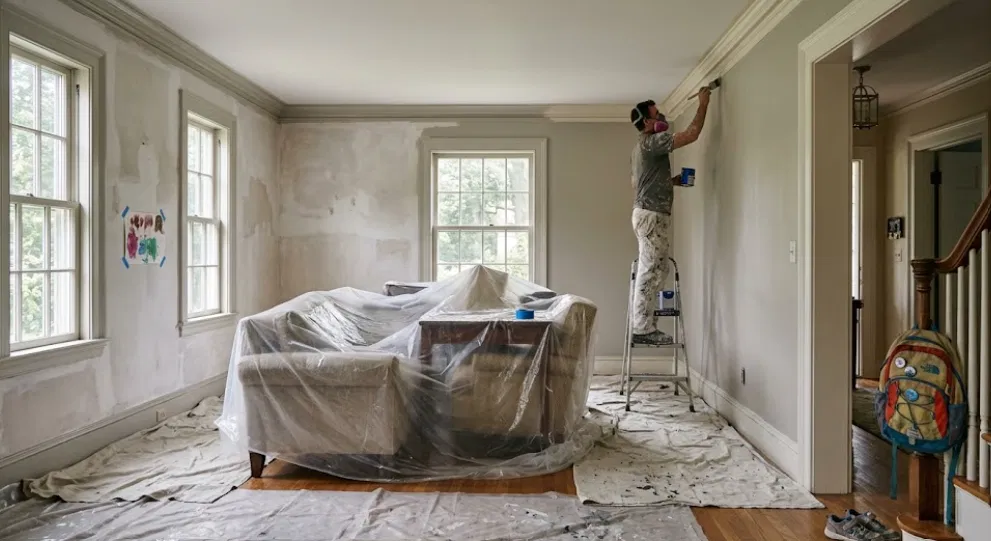
Residential painting is work on private homes: interiors, exteriors, cabinets, trim and carpentry repairs. The defining condition is that somebody lives there. A family is sleeping down the hall, there’s a dog, there are kids’ backpacks by the stairs, and the house has to stay livable while we work.
Prep and containment matter as much as the finish, because we’re working around people’s lives.
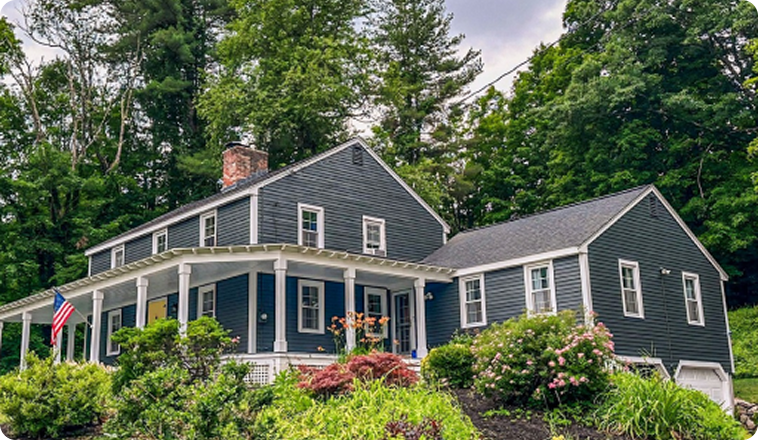
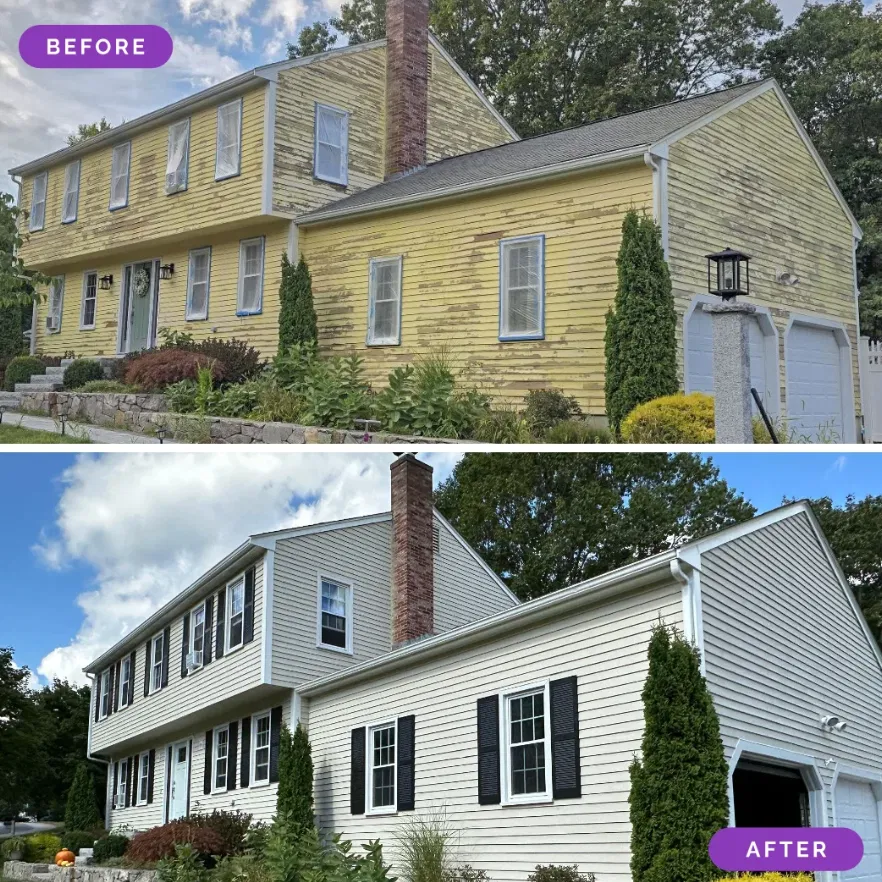
A good share of our work is exterior painting on older New England homes across Newton, Wellesley, Weston and Lexington, where the carpentry usually has to be sorted out before a brush comes near the siding.
What is commercial painting?
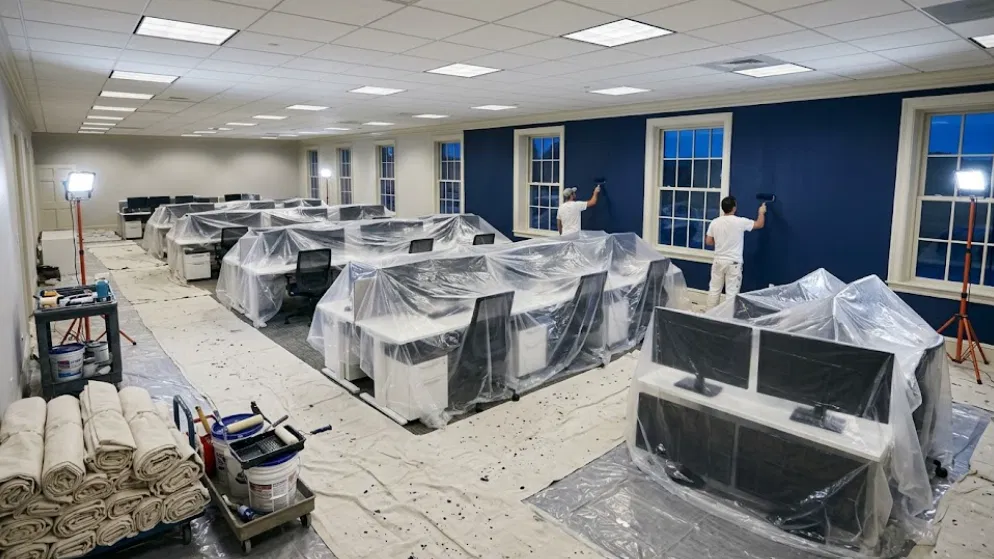
Commercial painting is work on buildings where business happens: offices, retail units, warehouses, medical suites, common areas in multi-unit properties. Nobody lives there, but people work there, customers walk through, and every hour the space is unusable costs the owner money.
The difference between residential and commercial painting services at a glance
| Residential | Commercial | |
|---|---|---|
| Typical projects | Interiors, exteriors, cabinets, trim | Offices, retail, warehouses, common areas |
| Scale | One home at a time | Large square footage, often phased |
| Scheduling | Around family routines, daytime | Nights, weekends, holidays to avoid downtime |
| Coatings | Premium residential finishes | High-durability, DTM, epoxy floors |
| Prep and safety | Containment, lead-safe on older homes | OSHA compliance, signage, higher liability |
| Crew size | Small, consistent team | Larger or phased crews |
| Priced by | Room or square foot estimate | Competitive bid, bulk square footage |
| Decision maker | Homeowner | Owner, facilities manager, or property manager |
Painting a home versus a business
For Homes….
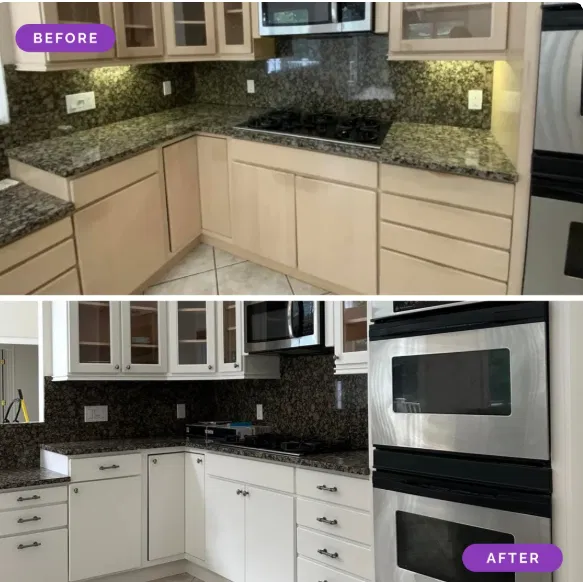
The family is the primary constraint in a home. We work during the day, deal with dust, have one room up and running, and clean up at night to make it homey for the night. Cabinet work is the next step in this challenge. When the kitchen’s out of commission for even a few days, it becomes a major inconvenience. This is why it is important to have accurate scheduling in that area.
For businesses…
Downtime is the major challenge in a business environment. It’s impossible to have a part of a retail store closed on a Saturday afternoon, and spraying an office with computers at 11 a.m. isn’t an option. So we work around the clock, nights, weekends, and during holiday closures, and we phase large spaces, opening one as the other opens.
Plus, the foot traffic affects our decisions – an office corridor wall gets more wear and tear in a year than a hallway wall in a home does in five.
Safety is another key difference. Licensing and insurance are necessary for both residential and commercial projects, with commercial sites presenting extra challenges. They must comply with OSHA requirements, be properly marked, may require lifting, and may have increased liability issues.
Older Massachusetts homes emphasize lead-safe practices. The EPA lead-safe rule requires certified companies and work practices for any building constructed prior to 1978. Considering the age of much of the housing here, that’s a big deal.
How pricing structures differ
Residential and commercial painting jobs have different pricing methods. The price for residential work is usually based on the number of rooms or square footage, after a walkthrough. The price isn’t based on the price of paint, it’s based on the condition of the surfaces and the amount of carpentry required before the paint is applied.
Older homes in New England may need more preparation work, so we prefer to see the home in person before we give a quote.
Commercial, pricing is more related to competitive bidding, based on a written specification. Working on a large square footage may reduce the cost per square foot, but after-hours labor, phasing and liability coverage can add it back.
Interestingly, two commercial quotes for the same square footage can vary significantly just because of scheduling differences, and that can come as a shock to many first-time commercial clients.
Residential and commercial work are not necessarily cheaper, they simply address different problems and have different pricing models.
Do commercial projects need different paint products?
Yes, usually. We use Benjamin Moore and Sherwin-Williams on both sides, but the lines differ.
Residential interiors get premium finishes chosen for appearance and washability. Commercial spaces get coatings chosen first for durability and cleanability: scrubbable acrylics in corridors, direct-to-metal coatings on railings, doors and structural steel, and epoxy systems on concrete floors in warehouses and workshops.
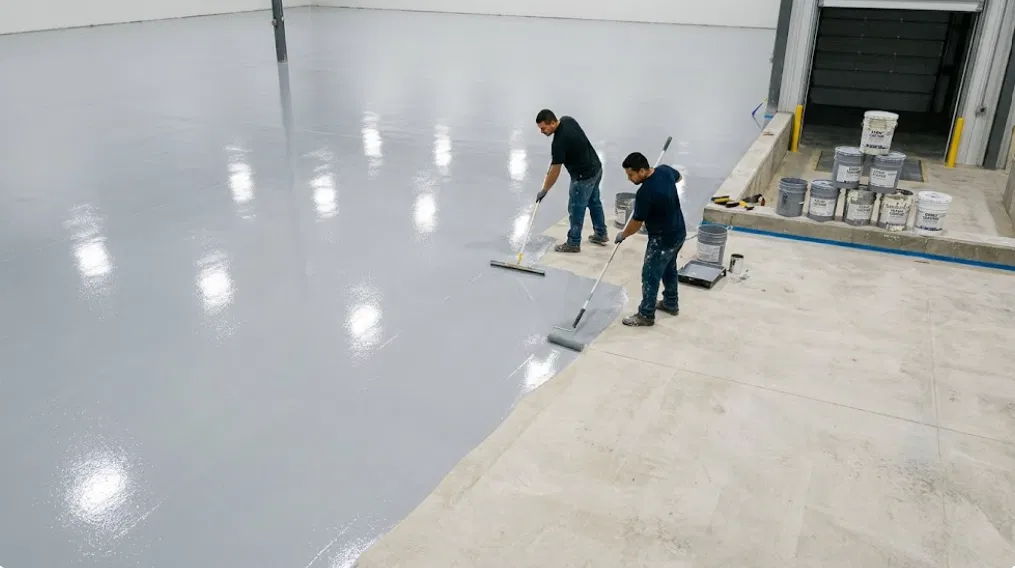
The principle is identical on both sides: the substrate and the wear dictate the product, not preference. It’s just that a warehouse floor and a dining room wall are asking very different questions, and New England adds its own, since coastal salt air and freeze-thaw cycles put demands on exterior work here that a milder climate never would.
Choosing commercial and residential painters
If you’re hiring, the questions that matter are the same either way. Are the crews in-house or subcontracted? Who’s actually on site each day? Is the company licensed and insured for the work being done? Can they schedule around how you use the space?
The reason we’ve kept our crews in-house rather than subcontracting is that continuity is what makes both sides work. The same people who are careful around a family’s furniture are careful around a tenant’s equipment, and you can’t build that habit in a crew you met that morning.
If you’re weighing up a home project or a business space, request an estimate and we’ll walk the space with you. Businesses, ask about after-hours and weekend scheduling; that’s usually the part that decides the project.
Frequently Asked Questions
What is the primary difference between residential and commercial painting?
It’s all about scale and timing. Residential painting is done in a home, typically during business hours, around the family.
Commercial painting, however, is often done in a busy business setting, and may occur during the night or on weekends. Not to mention the fact that it requires more space and safety requirements.
Are there different paint products for commercial projects?
They sure do. Commercial spaces are subjected to a lot more wear and tear and require high-durability, scrubbable coatings. You’ll find direct-to-metal products on steel and epoxy systems for concrete floors. Residential interiors are more about aesthetics and washability, however.
What is the difference between the prices of residential and commercial painting?
The pricing is typically done per room or per square foot for residential projects, following a walkthrough. Commercial jobs, however, tend to have competitive bidding. In this instance, the larger the square footage, the lower the rate, but after-hours labor and liability can increase costs.
Is it possible for one company to do residential painting and commercial painting?
Yes, and a lot of people do. If they have their own crews, you should find out if they subcontract one or both. This is a detail that can make or break quality and accountability.
Should I shut down my business during the painting?
Almost never. Most commercial painting is done during evenings, weekends or during the holidays. Larger spaces are often painted in stages, with part of the building being open while the other part is painted.
How much longer does a commercial job take than a house?
It’s more about access than size. A large office that is painted in stages may take more calendar days to paint than a house that is painted all at once. Each change is brief, making the time line longer.
What is unique about painting a home that is already occupied?
Containment and pace are all that matters. Furniture is wrapped, floors are covered and work is divided into sections to maintain the usability of rooms for the family.
At the end of every day, the house is put back together—a step not needed on an empty commercial site.